
by Julia Carcamo | Brand Marketing, Casino Marketing |
In a regional casino market, switching costs are basically zero. Your guests can choose a competitor tomorrow with no friction. That’s why offers alone aren’t enough anymore. “Return to Touch” is a practical framework for high-touch casino marketing that keeps recognition, warmth, and consistency in the guest experience, without abandoning automation. This post shows how to add a Touch Layer to every campaign, build a Touch Map across four key moments, and measure impact through reactivation and visitation frequency. If your marketing has started to sound like the same spreadsheet as everyone else, this is how you bring the human back.

by Julia Carcamo | Brand Marketing, Casino Marketing, Drivetime Marketing |
Guest loyalty isn’t dead—it’s just evolved.
The most resilient regional casinos aren’t outspending competitors. They’re winning hearts through emotional connection and consistent brand experience.
If you’re ready to turn brand love into lasting casino brand loyalty, this is where it starts.
by Julia Carcamo | Brand Marketing, Casino Marketing |
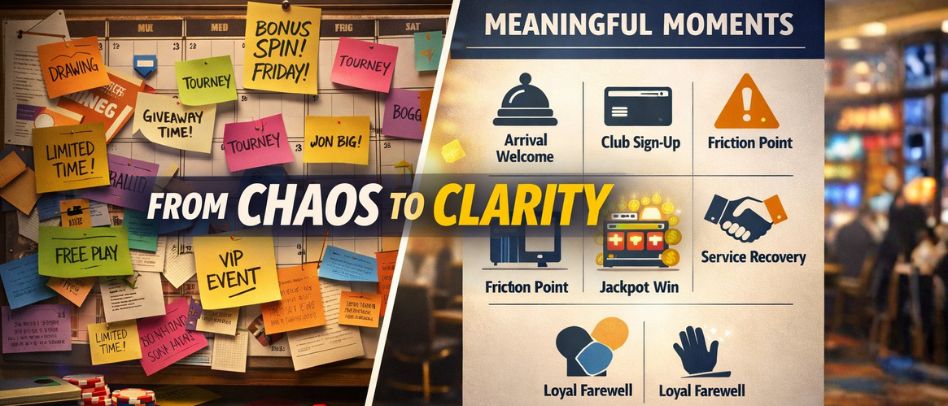
Most regional casinos don’t have a creativity problem—they have a clarity problem. When the calendar is packed with promotions, execution gets thin, teams burn out, and guests learn to chase deals instead of building loyalty. Marketing with meaning is the discipline of making every offer serve a purpose, not just a due date. In this post, you’ll get a practical framework to cut “random acts of marketing” and focus on the guest moments that actually shape loyalty—arrival, player’s club sign-up, redemption friction, and service recovery. You’ll also learn how employee behaviors translate brand meaning into real experiences, even on your busiest nights. If you want fewer promotions, better execution, and stronger loyalty, this is the place to start.

by Julia Carcamo | Brand Marketing, Casino Marketing, Drivetime Marketing |
A casino brand strategy does more than attract players through advertising—it amplifies every marketing effort, increases guest loyalty, and creates long-term revenue growth. Yet, many operators rely solely on promotions and reinvestment strategies, leaving untapped potential on the table. With evolving guest expectations and a rapidly shifting competitive landscape, it’s time to rethink how branding fuels success in the gaming industry.

by Julia Carcamo | Brand Marketing, Casino Marketing, Drivetime Marketing |
Casinos spend millions on marketing, but the most powerful loyalty drivers aren’t in the ads—they’re in the experience. From the scent in the air to the way a host remembers a guest’s favorite drink, these invisible brand cues create deep, emotional connections that keep players coming back. Learn how successful operators leverage subtle, subconscious signals to build guest loyalty in ways their competitors can’t replicate.

Recent Comments